The Gottman Institute
Decades of research on what actually predicts whether couples stay together. The small moves that protect a relationship, and the quiet patterns that end one.
You bring something up because it's bothering you. Now you're defending how you said it, and the thing you wanted to talk about never gets addressed.
When a fight happens, don't just move on, bottle it up, or keep arguing. Record it. Understand it. Repair it. Grow from it.
3 minutes. No email needed.
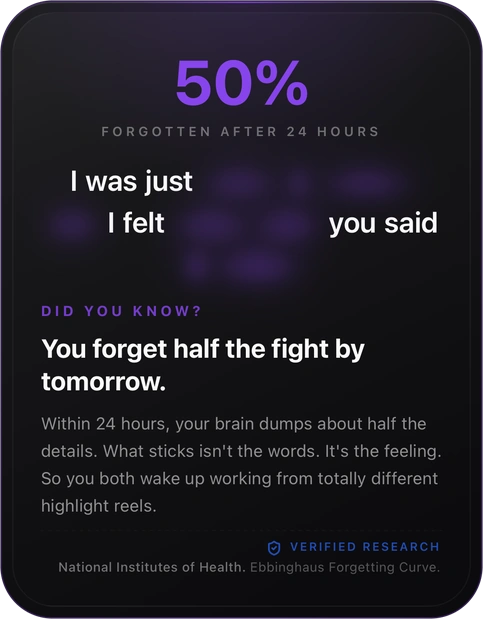
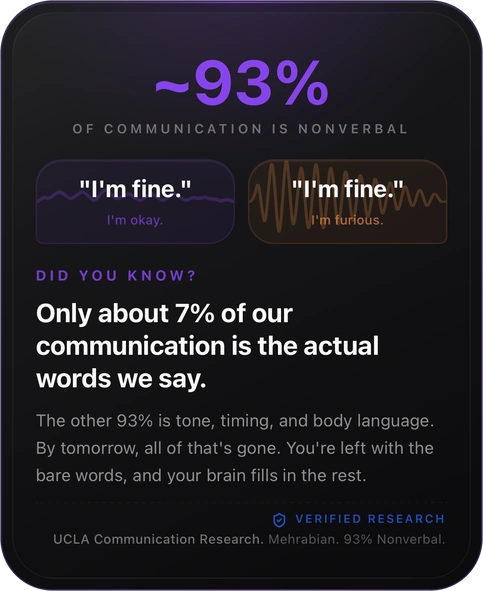
*These figures come from published studies, not a formula that fits every couple. Forgetting speed varies, and Mehrabian’s 7/38/55 split describes feelings carried by words, tone, and facial expression that contradict each other.
Why does the same fight keep happening?
Take the Free QuizYou remember what hurt. They remember what hurt them. The next conversation becomes an argument about the last one.You're both trying to be heard. Neither of you feels it.
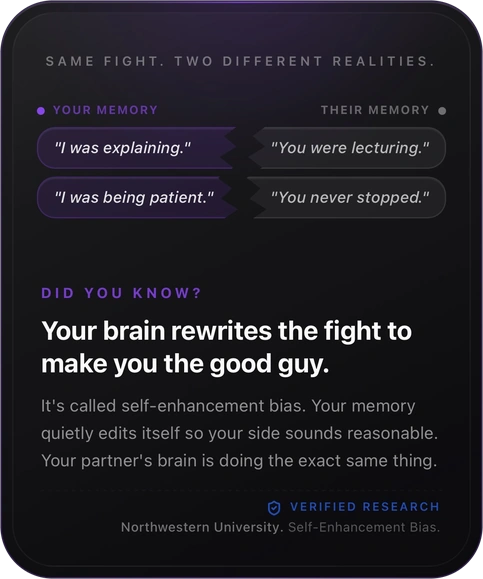
You remember it one way. They remember it another. You're both sure you're right. HeartSync starts with what was actually said: every word, the tone, the moment it turned.

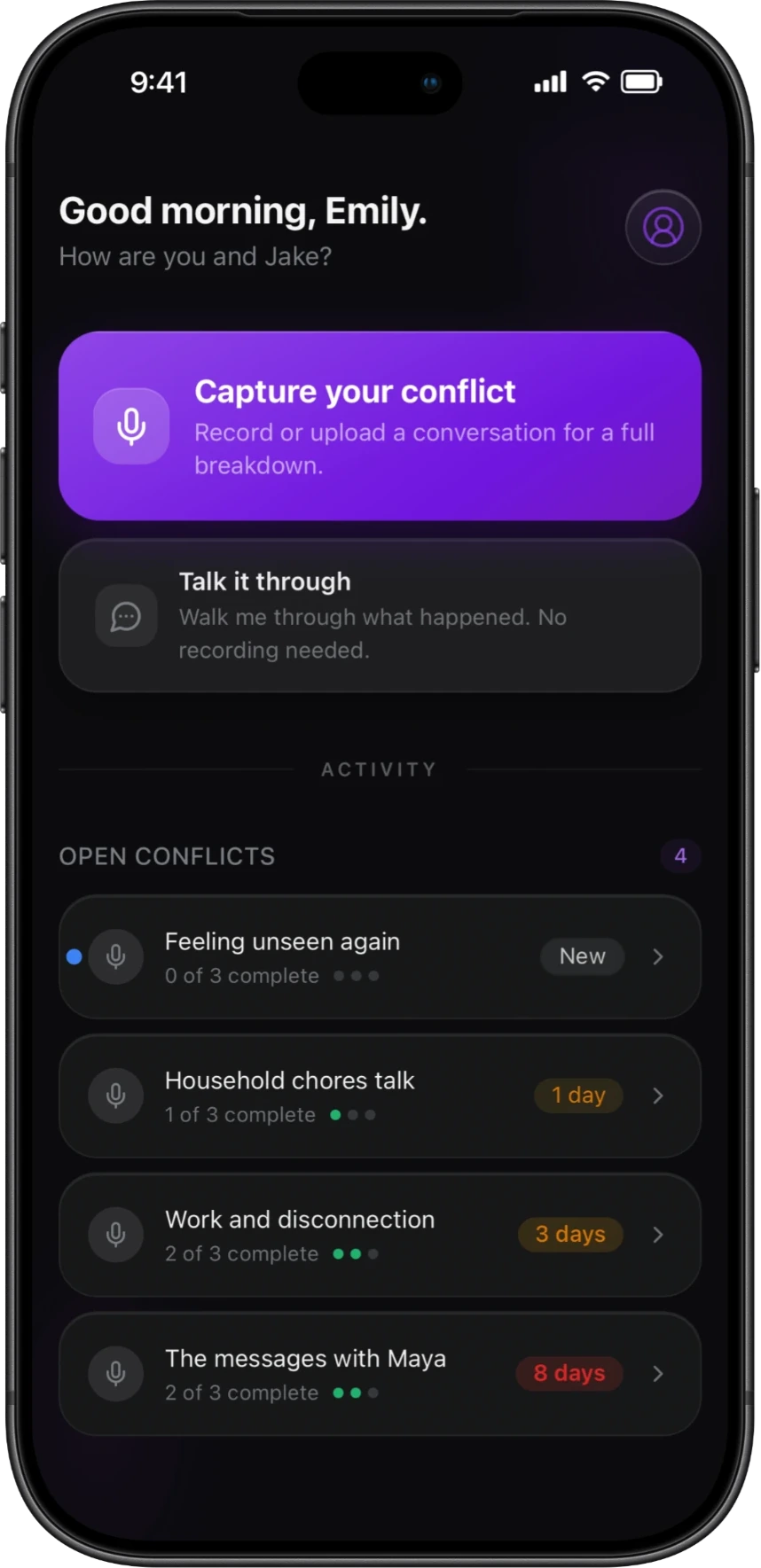
There's a moment in every fight where you stopped trying to be understood and started trying to win. HeartSync finds it. Your Conflict Breakdown walks through eight checkpoints: what started it, how each of you reacted, and what neither of you said out loud.
Your personal Conflict Health score tracks communication habits, not the worth of your relationship.

The hardest part isn't knowing you should talk again. It's knowing what to say so it doesn't become round two. Your Repair Cheat Sheet gives you the opening line, built from your actual conversation, in words that sound like you.

No recording? Just vent. Tell Chat what happened and it'll help you figure out what you actually need them to understand. It won't just take your side. It'll show you where you lost them.

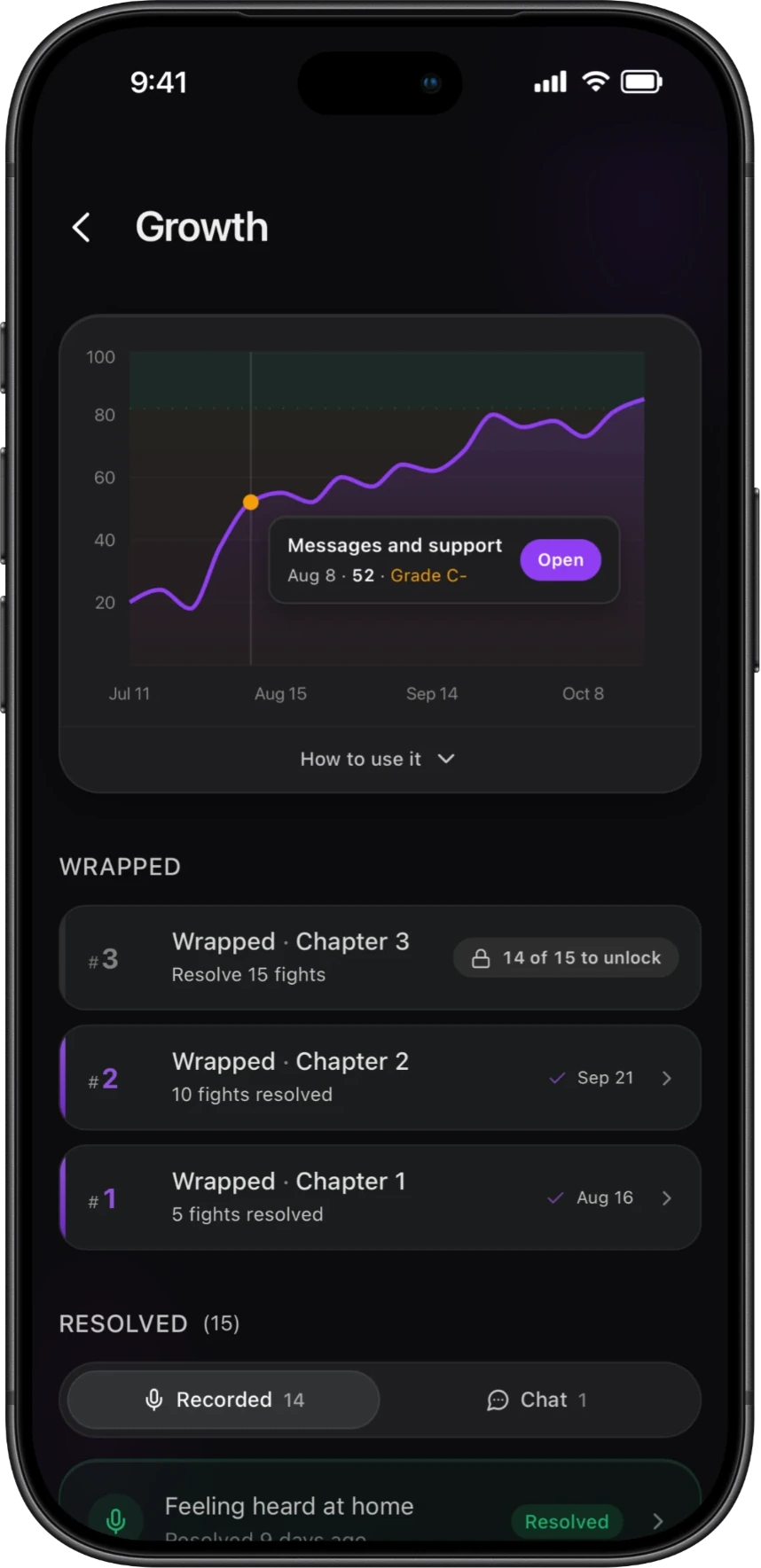
One fight tells you nothing. Ten fights tell you everything. Watch your Conflict Health score move over months, and let Wrapped show you the pattern you couldn't see from inside it.
Fair question. ChatGPT is great at talking things through. But it's built to agree with you.

HeartSync doesn’t pick sides. It just refuses to let the fight stay blurry.
HeartSync draws on research into how couples argue, what they need from each other, and how they communicate.
Decades of research on what actually predicts whether couples stay together. The small moves that protect a relationship, and the quiet patterns that end one.
Dr. Sue Johnson’s work on the real emotion sitting underneath every fight. Not the surface argument you think you’re having.
Marshall Rosenberg’s framework for saying the hard thing without weaponizing it. Needs and feelings instead of blame.
Why disconnection from your person can feel like the floor dropping out, and why your nervous system reacts the way it does in a fight.
HeartSync draws on these approaches. No affiliation or endorsement is implied. It is not a substitute for licensed care.